On 7 December 2025, soldiers in Benin appeared live on national television and announced that they had seized power from the country’s elected government. The announcement shocked the nation and the international community, as uniformed officers declared the dissolution of state institutions and suspension of the constitution. This dramatic broadcast instantly transformed Benin’s political landscape and triggered global concern about stability in West Africa.
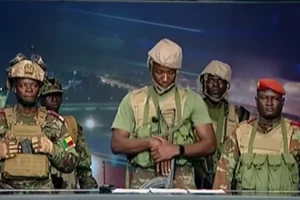
The soldiers identified themselves as a new military authority and claimed that they were acting in the national interest. They accused the existing leadership of mismanagement and promised a new political direction for the country. The sudden appearance of armed personnel on live television created fear, uncertainty, and confusion among citizens.
For decades, Benin had been viewed as one of the more stable political systems in the region. This event abruptly disrupted that image and placed the nation under intense international scrutiny. Many citizens began to seek clarity, safety, and truth in the midst of rapidly changing events.
Benin Coup Bombshell Soldiers Announce Seizure Of Power On National TV
What Happened On National Television
Armed soldiers appeared on state television wearing full military uniforms and reading a prepared statement. They claimed that the sitting president had been removed from power and that the government had been dissolved with immediate effect. The soldiers stated that the constitution was no longer in force and that national institutions had been suspended.
The broadcast was delivered with a serious tone and structured command presence. The group announced border closures, suspension of political activities, and restrictions on movement. These declarations caused panic in urban areas and widespread tension across the country.
Soon after the announcement, conflicting reports emerged. Some members of the national armed forces stated that they did not recognize the takeover and that they remained loyal to the constitutional order. This created uncertainty about who truly controlled the country.
Key Figures Behind The Announcement
The soldiers claimed leadership under a military committee led by Lieutenant Colonel Pascal Tigri. He was named as the head of the new governing authority during the broadcast. His identity quickly became central to the unfolding political situation.
The sitting president, Patrice Talon, was declared removed from office during the televised statement. At the time of the broadcast, his whereabouts were unclear, creating widespread speculation and concern. Government officials were reportedly either in hiding or attempting to respond to the unfolding crisis.
Other sections of the military remained divided. While some appeared to support the televised announcement, others publicly stated their commitment to the constitution and democratic order. This division raised fears of internal military conflict.
How The Situation Escalated So Quickly
The escalation happened within hours, catching both citizens and regional leaders by surprise. The coordinated nature of the television broadcast suggested prior planning and organization. Strategic language and confident delivery indicated that the group had prepared for this announcement.
There were reports of movement around key government facilities and security installations. Military vehicles were seen in parts of the capital, reinforcing the seriousness of the situation. This visual presence increased fear and heightened the sense of crisis.
Rumors spread rapidly through social media and community networks. Citizens feared possible clashes between loyalist and rebel forces. Daily life was disrupted as people avoided public areas and sought safety indoors.
Regional And International Reactions
Neighboring countries closely monitored the situation due to its potential regional impact. Political leaders called for calm and restoration of constitutional order. Diplomatic channels were activated to gather accurate information.
International organizations expressed concern over the military announcement. Statements emphasized respect for democratic processes and the need to avoid violence. Many governments warned against unconstitutional changes of power.
Economic uncertainty began to emerge as investors and businesses reacted cautiously. Travel, trade, and diplomatic activities were temporarily affected. The regional security climate grew tense as observers feared a ripple effect.
Possible Outcomes For Benin
One possible outcome is that the military group successfully consolidates power. This would involve securing key institutions and neutralizing opposition within the armed forces. A transitional military-led government could then be installed.
Another possible outcome is a counter-response from loyalist military units. This could result in the arrest of the coup leaders and restoration of the previous government. Such a scenario carries the risk of armed confrontations.
A third possibility is negotiation and compromise. Political and military leaders may agree on a transitional authority leading to new elections. This approach could reduce violence but may prolong uncertainty.
Impact On Ordinary Citizens
For ordinary citizens, the sudden power announcement created fear and confusion. Public transport, schools, and workplaces faced immediate disruption. Many people remained indoors due to fear of violence.
Communication became difficult as rumors replaced verified information. Families worried about loved ones working in government and security sectors. Daily routines were replaced by survival-focused behavior.
Economic pressures increased as markets slowed down. Businesses feared instability, and prices of basic goods started to fluctuate. The psychological toll on citizens became evident as stress and anxiety spread.
Public Trust And National Stability
Trust in national institutions suffered a major blow. Citizens were uncertain about who was truly in charge and which orders to follow. This confusion weakened overall national stability.
Years of political progress were suddenly placed under question. Democratic achievements now appeared fragile and reversible. National identity and unity faced serious strain.
People began questioning the future of governance in the country. The sense of safety and national confidence sharply declined. Restoring public trust became one of the most difficult challenges ahead.
Media’s Role In Shaping Public Understanding
Television played a central role in shaping perceptions of the event. The visual impact of armed soldiers making formal declarations left a lasting impression. The national broadcast ensured the message reached millions simultaneously.
Radio, social platforms, and international broadcasters amplified the message. Conflicting reports, however, created confusion. Many people struggled to distinguish verified facts from rumors.
The speed of media coverage intensified emotions. Fear, anger, and uncertainty spread much faster than calm or reassurance. The role of communication became as critical as military control.
Benin Coup Bombshell Soldiers Announce Seizure Of Power On National TV FAQs
1. What did the soldiers announce on national television?
They announced the seizure of power, dissolution of government, and suspension of the constitution.
2. Who was named as the leader of the military group?
Lieutenant Colonel Pascal Tigri was named as the head of the new military authority.
3. Was the president officially confirmed removed?
The soldiers claimed he was removed, but full independent confirmation remained unclear at the time.
4. Did the entire military support the announcement?
No, some sections of the military reportedly remained loyal to the constitutional government.
5. Were borders and political activities affected?
Yes, the soldiers announced border closures and suspension of political parties.
6. Is daily life in Benin affected?
Yes, transport, markets, work, and normal public life were heavily disrupted.
7. Is the situation fully resolved?
No, the situation remains fluid, uncertain, and under close observation.
Conclusion
The event now known as the Benin Coup Bombshell Soldiers Announce Seizure Of Power On National TV represents one of the most dramatic political moments in the nation’s recent history. The sudden military declaration disrupted stability, shocked citizens, and placed the country in a state of uncertainty.
Conflicting military responses and unclear leadership continue to deepen the national crisis. The future of governance in Benin now depends on whether dialogue, loyalty, or force prevails. Citizens, regional leaders, and the global community continue to watch closely, hoping for peace, stability, and restoration of lawful governance.
Recent Posts
Selecting the best Twin rollaway bed with memory foam mattress is essential when you need a convenient sleeping solution that does not compromise comfort. A quality twin rollaway bed provides...
Choosing the best rollaway bed for heavy person with headboard is essential for ensuring comfort, safety, and durability. Standard folding beds often support only 250–350 pounds, but heavy-duty...