In the intricate tapestry of Kenyan politics, the Mount Kenya region has long been considered an indispensable stronghold, the “kingmaker” whose support can secure the presidency. Its dense population and consequential voter turnout have made its loyalty a cornerstone of any successful national campaign.
However, a new political dynamic is unfolding, one that threatens to unravel this historic alliance at the top. At the center of this shifting landscape is Deputy President Rigathi Gachagua, whose assertive and often controversial dominance in the region is creating significant headwinds for the national administration.
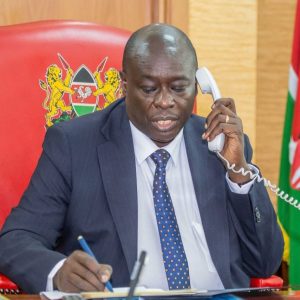
This analysis delves into the complex political equation, arguing that Gachagua’s approach, rather than solidifying the base, is inadvertently alienating voters and costing the president crucial support. Through an examination of local grievances, national perceptions, and strategic missteps, we identify the ten most compelling reasons why this dominance is proving counterproductive.
From fueling internal dissent to distorting the national development agenda, the consequences are multifaceted and profound. Understanding these reasons is critical not only for political analysts but for every citizen invested in the nation’s governance and unity. This is more than a regional issue; it is a national pivot point with the potential to reshape Kenya’s political future.
How Rigathi Gachagua Dominance In Mount Kenya Is Costing The President Votes
1. Perception of Exclusionary “One-Man” Politics
Rigathi Gachagua’s forceful projection as the region’s “undisputed spokesman” has fostered a perception of exclusionary politics. Mount Kenya is not a monolith; it comprises diverse counties, constituencies, and sub-regions with multiple elected leaders and voices. By positioning himself as the sole gatekeeper and channel to the presidency, Gachagua has marginalized other elected senators, governors, and members of parliament. This breeds resentment among these leaders and their supporters, who feel their democratic choices and representatives are being invalidated. Voters who backed other local leaders perceive this consolidation of influence as an authoritarian overreach, creating a disconnect between their local mandates and the national administration’s perceived regional face. This sentiment translates into apathy or protest votes against the president’s party, as supporters of sidelined leaders feel no ownership of the national government’s agenda.
2. The “Mountain vs. Nation” Dichotomy
Gachagua’s rhetoric, particularly his emphatic focus on “protecting the mountain,” has dangerously framed national politics as a zero-sum game between Mount Kenya’s interests and those of other regions. While appealing to a narrow base, this narrative alienates the vast coalition of voters from across Kenya who elected the president on a platform of national unity and “Kazi kwa Wote” (Work for Everyone). It reinforces harmful ethnic binaries and makes it difficult for the president to project a genuinely inclusive national image. Swing voters in the Rift Valley, Western, and Coastal regions may view the administration as being held hostage by parochial Mount Kenya interests championed by the DP. This perception costs the president votes nationwide, as he appears unable to transcend the very ethnic anchors he promised to move beyond, with Gachagua’s dominance being the most visible symbol of that failure.
3. Amplification of Local Grievances
Instead of acting as a shock absorber for government criticism, Gachagua’s prominence has often amplified local grievances and directly tied them to the presidency. His public confrontations over issues like the coffee sector, tea reforms, and fertilizer distribution, while intended to show he is fighting for the people, have the opposite effect. They elevate every sectoral challenge to a crisis of confidence in the national government. Farmers and business owners experiencing delays or policy hiccups no longer see a faceless bureaucracy at fault; they see a failure of their most vocal champion—and by direct extension, the president who appointed him. This direct linkage means that every unmet local expectation is no longer an administrative issue but a personal political betrayal, driving disillusioned voters to withhold support in future elections.
4. Stifling of Competitive Party Democracy
Healthy intra-party competition is the lifeblood of political vibrancy. Gachagua’s dominance, marked by reports of sidelining rivals within the United Democratic Alliance (UDA) in the region, has stifled this process. The party risks becoming a vehicle for one individual’s influence rather than a platform for ideas and service. Ambitious, popular local leaders with independent support bases are either coerced into subservience or pushed into silent—or not-so-silent—opposition. This internal suppression creates factions and bitterness. When party primaries are perceived as pre-determined or unfairly influenced by the DP’s camp, it disenfranchises thousands of party members. These alienated members either stay home on election day or support alternative candidates in protest, directly bleeding votes from the president’s political vehicle.
5. The “Shadow President” Syndrome
Gachagua’s assertive style has, in some quarters, fostered the perception of a “shadow president” in the region, undermining the authority and stature of the actual president. When local leaders and national directives are seen to require the DP’s blessing or face his public rebuttal, it creates a confusing power dynamic. It leads voters to question: who is really in charge? This syndrome diminishes the president’s brand as a strong, decisive leader and paints him as being managed or constrained by his deputy. For voters who value clear, unambiguous leadership, this perceived weakness is a significant turn-off. They may conclude that a vote for the president is, in effect, a vote for Gachagua’s dominance—a calculus that may not work in the president’s favor among moderate and independent voters.
6. Polarization of the Youth Vote
Mount Kenya’s youth demographic is vast, increasingly educated, and connected to national and global discourses. Their priorities—jobs, innovation, affordable living, and social liberty—often transcend traditional ethnic political patronage. Gachagua’s political persona, which leans heavily on traditional ethnic mobilization and older-generation politicking, fails to resonate with this critical bloc. His dominance symbolizes a political old guard that many youths are eager to move beyond. They associate his style with the very problems—divisive politics, defensive ethnic interests—that hinder national progress. Consequently, the president’s alliance with this dominant figure makes it challenging to craft a compelling, modern narrative for the youth. This pushes young voters towards alternative, more ideologically flexible or charismatic opponents, costing the administration a generation of support.
7. Neglect of Broader Government Achievements
The constant media focus on Gachagua’s political maneuvers, statements, and regional battles crowds out communication about the broader government’s achievements. Infrastructure projects, macroeconomic policies, and diplomatic gains spearheaded by the president are drowned out by the noise of the deputy president’s latest controversy or pronouncement on local matters. This creates a distorted feedback loop where the administration’s legacy in the region is defined not by tangible development but by the daily political drama surrounding the DP. Voters, therefore, may base their electoral decisions on this drama rather than on a balanced assessment of the government’s performance. The president gets little direct credit for successes but full blame for the political friction his deputy generates.
8. Alienation of the Professional and Business Class
The Mount Kenya region has a significant and influential professional and business community with interests spanning the entire nation. Their success depends on stability, predictable policy, and national cohesion. Gachagua’s combative and ethnically-charged rhetoric is seen by this class as a threat to the very stability they require. It introduces an element of political risk that can deter investment and complicate business operations nationwide. This elite and middle-class bloc, whose support is crucial for funding, intellectual backing, and influencing public opinion, begins to see the administration as a source of instability rather than a guarantor of it. Their disillusionment may not always manifest in public protests, but in quiet lobbying against the status quo, reduced economic participation, and ultimately, support for a more predictable, nationally-focused alternative.
9. Weaponization of Anti-Corruption Sentiments
Corruption remains a visceral issue for Kenyan voters. Gachagua’s own legal battles and the controversies surrounding his associates, regardless of judicial outcomes, have placed him at the center of this narrative. His dominance, therefore, inextricably links the administration’s anti-corruption credentials to his personal legal journey. For opponents, this is a potent weapon. They can frame the entire Mount Kenya support for the government as an endorsement of impunity. This tarnishes the president’s own pledges of transparency and ethical leadership. Swing voters and opposition sympathizers in other regions use this association to delegitimize the president’s entire moral authority, convincing fence-sitters that a vote for the president is a vote for a compromised system, thus driving them to the opposition.
10. Limiting Strategic Flexibility and Alliances
Finally, Gachagua’s entrenched dominance limits the president’s strategic flexibility to form new alliances or recalibrate his political strategy. Politics is dynamic, and coalitions must evolve. If the president is perceived as being irrevocably yoked to a single, dominant regional kingpin, it makes it nearly impossible to negotiate with other leaders within Mount Kenya or from other regions who may have personal or political disagreements with the DP. Potential alliance partners may demand concessions or assurances that are impossible under the current dynamic. This rigidity can box the president into a shrinking political corner, preventing the expansion of his voting base while the existing one erodes. The cost is measured in lost opportunities to build broader, more sustainable national coalitions.
FAQs: Understanding the Gachagua Factor in Kenyan Politics
1. Isn’t a strong deputy president from Mount Kenya supposed to secure the region’s votes for the president?
Traditionally, yes. However, there is a critical difference between a strong deputy and a dominant one. A strong deputy mobilizes support quietly, resolves conflicts, and amplifies the president’s agenda. A dominant deputy, as analyzed, can centralize power, alienate other leaders, create a competing power center, and become a lightning rod for criticism. This dominance shifts focus from the president’s achievements to the deputy’s controversies, ultimately costing votes rather than securing them.
2. Could these lost votes in Mount Kenya really make a difference in a national election?
Absolutely. Mount Kenya has a massive voter population, often with high turnout. Even a 10-15% swing due to disillusionment can mean a loss of hundreds of thousands of critical votes. In Kenya’s competitive presidential elections, where the margin of victory can be slim, such a deficit from a traditional stronghold can be catastrophic. Furthermore, the national perception damage influences swing voters in other regions, multiplying the effect.
3. Why doesn’t the president simply rein in his deputy?
The relationship between a president and deputy is among the most delicate in politics. It involves complex bonds of loyalty, electoral debt, and power-sharing agreements. Publicly reining in the DP could be seen as an act of betrayal, potentially triggering an open rebellion within the administration’s core base. It is a high-risk maneuver that requires immense political capital and careful timing.
4. Are these issues unique to Rigathi Gachagua and Mount Kenya?
While the specifics are unique, the dynamic is a common political phenomenon globally. It mirrors challenges seen where a powerful vice-president or deputy becomes emblematic of regional or factional overreach, creating a liability for the national ticket. The ethnic dimension in Kenya’s politics makes the consequences particularly acute and visible.
5. What are the potential benefits of Gachagua’s approach that this analysis might be missing?
The primary argued benefit is clear, unequivocal communication and a fierce defense of the region’s interests in government, which resonates with a segment of the population that feels historically taken for granted. It provides a single point of contact and a sense of political security for those who prefer a strong, tribal champion. However, the analysis suggests the long-term costs of this approach outweigh these short-term benefits.
6. How are opposition parties capitalizing on this situation?
Opposition parties are employing a two-pronged strategy. Within Mount Kenya, they are positioning themselves as the inclusive alternative for those marginalized by Gachagua’s dominance, reaching out to sidelined leaders and disaffected youth. Nationally, they are using Gachagua as the poster child to argue that the government is tribal, divisive, and beholden to narrow interests, hoping to unite all other regions against this perceived dominance.
7. What could be a solution to this political dilemma?
Potential solutions are complex but could include: a deliberate effort by the president to directly engage with a broader spectrum of Mount Kenya leaders, bypassing the gatekeeper model; a strategic recalibration of the DP’s public role to focus more on national duties; and a renewed communication drive highlighting inclusive national achievements over regional politicking. Ultimately, it requires re-balancing the regional and national personas of the administration.
Conclusion: A Call for Recalibrated Leadership
The political dominance of Deputy President Rigathi Gachagua in Mount Kenya, rather than being an unassailable fortress for the presidency, has become a structure with significant cracks in its foundation. The ten reasons outlined reveal a pattern where assertive regional championing is backfiring, fostering exclusion, national alienation, and a damaging personalization of governance.
The cost is measured in lost votes from disillusioned locals, alienated national partners, and a youth demographic seeking a different future. For an administration that promised unity and economic transformation, this trajectory is unsustainable. The president faces a critical choice: to allow the current dynamic to define his legacy and limit his coalition, or to courageously recalibrate the balance of power and narrative within his government.
The electorate, in Mount Kenya and beyond, is watching and making its calculations. The 2027 general election may well be decided by how this administration addresses the very paradox its own deputy president has come to embody. Engage in this crucial national conversation by sharing this analysis, discussing it in your community forums, and demanding leadership that prioritizes inclusive nation-building over divisive dominance. Your voice and your vote are the ultimate arbiters of Kenya’s political direction.
Recent Posts
Selecting the best Twin rollaway bed with memory foam mattress is essential when you need a convenient sleeping solution that does not compromise comfort. A quality twin rollaway bed provides...
Choosing the best rollaway bed for heavy person with headboard is essential for ensuring comfort, safety, and durability. Standard folding beds often support only 250–350 pounds, but heavy-duty...