Naval confrontations in the Persian Gulf have long shaped geopolitical tensions between the United States and Iran. One of the most widely discussed maritime clashes occurred during the late stages of the Iran-Iraq War, when U.S. naval forces engaged Iranian military assets in response to escalating attacks on international shipping.
The most significant confrontation involving the destruction of an Iranian warship by U.S. forces occurred during the 1988 naval battle known as Operation Praying Mantis. This operation represented the largest U.S. naval surface engagement since World War II and marked a decisive moment in the so-called “Tanker War” phase of the Iran-Iraq conflict.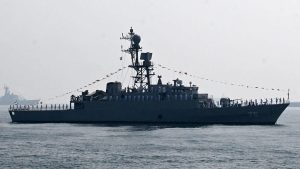
Although popular discussions sometimes claim that a U.S. submarine sank an Iranian warship, historical records show that the primary vessels destroyed were engaged by U.S. surface ships and carrier-based aircraft rather than submarines. These events occurred primarily in the Persian Gulf, near strategic Iranian offshore oil platforms that were being used for military surveillance and command operations.
Understanding where and how these engagements occurred requires examining the geography of the Persian Gulf, the strategic context of the Iran-Iraq War, and the details of Operation Praying Mantis. This article provides a comprehensive breakdown of the incident, the location of the naval battle, the ships involved, and the long-term consequences for regional security.
Where Did The US Submarine Sink The Iranian Warship?
The Short Answer: Where Did the Incident Occur?
The Iranian warships destroyed during the 1988 confrontation were sunk in the Persian Gulf, primarily near Iranian offshore oil platforms such as the Sassan and Sirri oil fields.
Key locations include:
-
Northern Persian Gulf
-
Near the Sirri and Sassan oil platforms
-
Waters between Iran and the United Arab Emirates
-
Strategic shipping lanes used by oil tankers
These waters were highly militarized during the late 1980s due to attacks on commercial vessels transporting oil through the Gulf.
Understanding the Context: The Iran-Iraq War and the Tanker War
To fully understand the sinking of Iranian naval vessels, it is important to examine the geopolitical situation at the time.
The Iran-Iraq War (1980–1988) was one of the longest conventional wars of the 20th century. It began when Iraq invaded Iran following the Iranian Revolution.
However, by the mid-1980s the conflict expanded beyond land battles.
Both countries began attacking oil tankers and merchant vessels in the Persian Gulf to cripple each other’s economies.
This phase of the conflict became known as the Tanker War.
Key developments included:
-
Iran targeting ships connected to Iraq or its allies.
-
Iraq attacking Iranian oil shipments.
-
Neutral shipping being caught in the crossfire.
Because the Persian Gulf is one of the world’s most critical energy corridors, global powers became increasingly concerned about the security of shipping routes.
The United States ultimately intervened to protect commercial shipping and maintain freedom of navigation.
Operation Praying Mantis: The Largest US Naval Battle Since WWII
The naval clash that led to the sinking of Iranian warships occurred on April 18, 1988.
The operation was called Operation Praying Mantis.
It was launched after the U.S. Navy frigate USS Samuel B. Roberts struck an Iranian naval mine earlier that month.
The explosion severely damaged the ship and nearly sank it.
Investigations confirmed that the minefield had been deployed by Iran.
The United States responded with a coordinated naval strike targeting Iranian military assets in the Persian Gulf.
The objectives were:
-
Destroy Iranian military infrastructure at sea.
-
Reduce Iran’s ability to threaten shipping lanes.
-
Demonstrate U.S. military resolve.
Iranian Warships Destroyed During the Battle
During Operation Praying Mantis, several Iranian naval vessels were damaged or destroyed.
The most notable Iranian warships sunk included:
-
IRIS Sahand
-
IRIS Joshan
These vessels were key components of Iran’s naval force at the time.
IRIS Sahand
The Sahand was an Iranian Alvand-class frigate.
During the battle, it attempted to attack U.S. aircraft and naval forces operating near Iranian oil platforms.
Carrier-based aircraft from the U.S. Navy launched multiple strikes.
The frigate was hit by:
-
Harpoon anti-ship missiles
-
Laser-guided bombs
The damage triggered fires and explosions onboard.
Eventually, the ship sank in the Persian Gulf near the Larak Island area, south of the Strait of Hormuz.
IRIS Joshan
The Joshan was an Iranian Kaman-class missile boat.
It confronted a group of U.S. warships and fired a Harpoon missile at them.
The missile missed its target.
In response, U.S. forces launched several missiles and artillery strikes.
The vessel was heavily damaged and eventually sunk in the Persian Gulf.
Was a US Submarine Involved?
Many internet searches ask whether a U.S. submarine sank the Iranian warship.
However, the historical evidence shows:
-
No Iranian warship was sunk by a U.S. submarine during Operation Praying Mantis.
-
The ships were destroyed by surface ships and aircraft.
U.S. submarines were present in the region during the broader conflict, but they did not directly participate in the sinking of Iranian vessels during the 1988 battle.
The confusion likely arises because submarines often play major roles in naval warfare and many assume they were involved.
In reality, the engagement relied on:
-
Guided missile cruisers
-
Destroyers
-
Carrier aircraft
Why the Persian Gulf Was the Battle Zone
The Persian Gulf is one of the most strategically important waterways in the world.
Several factors made it the central location of the confrontation.
1. Oil Transportation
About one-third of the world’s seaborne oil shipments pass through the region.
Disruptions could impact global energy markets.
2. The Strait of Hormuz
This narrow passage connects the Persian Gulf to the Gulf of Oman and the Arabian Sea.
It is one of the world’s most important maritime chokepoints.
Any naval conflict near the strait could threaten international shipping.
3. Military Presence
By the late 1980s, multiple navies operated in the region, including:
-
United States
-
Iran
-
Iraq
-
Allied Gulf states
This concentration of forces increased the likelihood of confrontation.
US Forces Involved in the Operation
Several American warships participated in Operation Praying Mantis.
Key vessels included:
-
USS Enterprise (aircraft carrier)
-
USS Wainwright
-
USS Simpson
-
USS Bagley
These ships launched missiles and coordinated strikes against Iranian naval assets.
Carrier aircraft played a decisive role in the destruction of the Sahand.
The Role of Iranian Oil Platforms
Iran had converted several offshore oil platforms into military observation posts.
These installations were used to:
-
Monitor ship movements
-
Coordinate attacks
-
Support Iranian naval operations
During Operation Praying Mantis, U.S. forces attacked two platforms:
-
Sassan
-
Sirri
These platforms were located in the northern Persian Gulf.
After warnings were issued, U.S. forces destroyed the structures with naval gunfire and explosives.
The Strategic Outcome of the Battle
Operation Praying Mantis had significant military and political consequences.
1. Iranian Naval Losses
Iran lost:
-
One frigate
-
One missile boat
-
Several smaller vessels
Another frigate, Sabalan, was heavily damaged but survived.
2. Demonstration of US Naval Power
The operation demonstrated the ability of U.S. naval forces to dominate regional waters quickly.
This sent a strong signal to Iran and other regional actors.
3. Impact on the Iran-Iraq War
The confrontation increased pressure on Iran and contributed to the eventual ceasefire later in 1988.
Many historians believe the incident helped convince Iran to accept a United Nations peace agreement.
Why the Incident Still Matters Today
The sinking of Iranian warships during Operation Praying Mantis remains relevant in modern geopolitics.
Tensions between the United States and Iran continue to revolve around the Persian Gulf.
Several issues keep the region strategically important:
-
Global energy supply routes
-
Military bases and naval patrols
-
Regional rivalries
-
Nuclear negotiations
Naval confrontations, drone incidents, and tanker seizures in recent years show that the Persian Gulf remains a flashpoint.
Understanding past incidents helps explain why naval forces still operate heavily in these waters today.
Geography of the Persian Gulf Naval Battlefield
The specific maritime zones where the battles occurred are located between:
-
Iranian coastal waters
-
The United Arab Emirates
-
Shipping routes toward the Strait of Hormuz
The area contains numerous islands and oil platforms that can serve as strategic observation points.
Important nearby islands include:
-
Larak Island
-
Abu Musa
-
Qeshm Island
Control over these areas provides surveillance advantages over shipping lanes.
Misconceptions About Submarine Warfare in the Gulf
Although submarines are extremely powerful naval weapons, their role in the Persian Gulf has historically been limited by geographic factors.
The Gulf is relatively shallow compared to open oceans.
Average depth:
-
50 meters (164 feet)
This environment makes submarine operations more difficult because vessels are easier to detect.
As a result, surface ships and aircraft often dominate combat operations in the region.
Other US-Iran Naval Encounters
The 1988 battle was not the only maritime confrontation between the two nations.
Other incidents include:
1. Operation Earnest Will (1987–1988)
The United States escorted Kuwaiti oil tankers to protect them from Iranian attacks.
2. The USS Vincennes Incident (1988)
A U.S. cruiser accidentally shot down an Iranian passenger airliner, killing 290 people.
This tragic event further escalated tensions.
3. Modern Gulf Incidents
Recent decades have seen:
-
Iranian seizure of tankers
-
Drone shoot-downs
-
Naval harassment incidents
These events highlight the continuing volatility of the region.
How Naval Warfare Has Changed Since 1988
Modern naval warfare is dramatically different from the battles of the late Cold War era.
Today’s fleets rely on:
-
Advanced radar systems
-
Hypersonic missiles
-
Unmanned drones
-
Cyber warfare capabilities
However, the basic strategic importance of maritime chokepoints like the Strait of Hormuz remains unchanged.
Control of these waterways still influences global trade and security.
Where Did The US Submarine Sink The Iranian Warship FAQs
1. Where exactly was the Iranian warship sunk?
The Iranian frigate Sahand was sunk in the Persian Gulf, south of the Strait of Hormuz near Larak Island during Operation Praying Mantis on April 18, 1988.
2. Did a US submarine sink the Iranian warship?
No. The Iranian warships destroyed during the battle were sunk by U.S. surface ships and carrier-based aircraft, not submarines.
3. What Iranian ships were destroyed in the battle?
The most notable vessels lost were the IRIS Sahand frigate and the IRIS Joshan missile boat.
4. Why did the US attack Iranian naval forces?
The attack was launched after the U.S. Navy frigate USS Samuel B. Roberts struck an Iranian naval mine in the Persian Gulf.
5. What was Operation Praying Mantis?
Operation Praying Mantis was a U.S. naval strike conducted on April 18, 1988, targeting Iranian military assets in response to mining attacks.
6. Where is the Persian Gulf located?
The Persian Gulf lies between Iran and the Arabian Peninsula, connecting to the Gulf of Oman through the Strait of Hormuz.
7. Was this the largest US naval battle after World War II?
Yes. Operation Praying Mantis is widely considered the largest U.S. naval surface engagement since World War II.
Conclusion
The Iranian warships destroyed during the 1988 confrontation were sunk in the Persian Gulf, primarily near Iranian offshore platforms and the strategic waters surrounding the Strait of Hormuz.
Although many assume a U.S. submarine carried out the attack, historical records show that surface warships and carrier-based aircraft were responsible for the destruction of the vessels. The battle occurred during Operation Praying Mantis, a retaliatory strike following the mining of a U.S. Navy frigate.
This naval engagement remains one of the most significant military confrontations between the United States and Iran. If you want deeper geopolitical insights and historical breakdowns of major naval conflicts, continue exploring our expert guides and analyses.
Recent Posts
Selecting the best Twin rollaway bed with memory foam mattress is essential when you need a convenient sleeping solution that does not compromise comfort. A quality twin rollaway bed provides...
Choosing the best rollaway bed for heavy person with headboard is essential for ensuring comfort, safety, and durability. Standard folding beds often support only 250–350 pounds, but heavy-duty...