Looking for a step by step guide on how do you stand still on a unicycle? To stand still on a unicycle, practice balancing by rocking back and forth, gradually reduce your support dependency, focus on small pedal movements, maintain a straight posture, and consistently practice to build muscle memory.
- Unicycling is an exciting and challenging sport that requires balance, coordination, and practice.
- Standing still on a unicycle is a skill that showcases a rider’s control and balance.
- One of the most impressive skills to master on a unicycle is the ability to stand still, also known as “idling.”
- This skill allows the rider to stay in place without having to step off or move forward continuously.
In this comprehensive guide, we’ll take you through the steps to learn how to stand still on a unicycle, provide helpful tips and tricks, and offer practical advice, and address common concerns to help you achieve success.
Reviews : Best Electric Unicycle For Off Road
How Do You Stand Still on a Unicycle? A Step By Step Guide
What You Need
Before you start practicing, ensure you have the following:
- A unicycle that fits your height and skill level.
- A flat, open area with minimal obstacles.
- Protective gear, including a helmet, knee pads, and elbow pads.
- Patience and determination.
Understanding the Basics
Before attempting to stand still, it’s essential to have a solid foundation in basic unicycling skills. 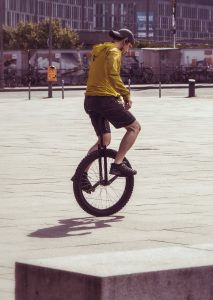 You should be comfortable mounting and dismounting, riding forward and backward, and making turns. If you’re still working on these basics, spend some time practicing until you feel confident.
Step-by-Step Guide to Standing Still on a Unicycle
Step 1: Find Your Balance
- Start with Support: Begin by positioning yourself next to a wall or a sturdy object that you can hold onto for balance.
- Mount the Unicycle: Get on the unicycle and ensure you’re comfortably seated with both feet on the pedals.
- Posture Check: Keep your back straight, shoulders relaxed, and eyes looking forward. Maintain a slight bend in your knees.
Step 2: Practice Rocking Back and Forth
- Small Movements: With one hand holding onto the support, practice rocking back and forth by shifting your weight slightly. This motion helps you get a feel for balancing in place.
- Pedal Pressure: Apply gentle pressure to the pedals to control the rocking motion. The goal is to make small, controlled movements without losing balance.
Step 3: Reduce Dependency on Support
- Light Touch: Gradually lessen the pressure of your hand on the support. Try to use it only for slight adjustments rather than relying on it completely.
- Focus on Balance: Concentrate on maintaining your balance using your core muscles and adjusting your pedal pressure.
Step 4: Start Idling
- Single Pedal Movement: Begin by moving one pedal slightly back and forth while keeping the other pedal relatively still. This creates a small rocking motion.
- Increase Range: Gradually increase the range of your pedal movement, allowing the unicycle to move more. This movement is known as idling.
- Balance Adjustments: Use your body weight and slight shifts in posture to keep your balance as you idle.
Step 5: Mastering the Idle
- Consistent Practice: Practice idling regularly to build muscle memory and improve your balance. Start with short sessions and gradually increase the duration.
- Both Feet: Practice idling with both your dominant and non-dominant foot to develop balance and control on both sides.
Step 6: Standing Still
- Minimize Movement: As you become more comfortable with idling, focus on reducing the range of your pedal movement. Aim to make the movements as small and controlled as possible.
- Still Position: Try to maintain a position where the pedals are almost horizontal. This position allows for better control and balance.
- Breathing and Relaxation: Keep your breathing steady and your muscles relaxed. Tension can make it harder to balance.
Step 7: Advanced Techniques
- One-Foot Idle: Once you’ve mastered standing still with both feet, challenge yourself by idling with only one foot. This advanced technique further improves balance and control.
- Freemounting into Idle: Practice mounting the unicycle and immediately transitioning into an idle. This skill is useful for demonstrations and performances.
Tips for Success
- Patience: Learning to stand still on a unicycle takes time and practice. Be patient with yourself and celebrate small progress.
- Consistent Practice: Regular practice is key to mastering any unicycling skill. Dedicate time each day to work on your balance and control.
- Safety First: Always wear protective gear and practice in a safe environment to prevent injuries.
- Stay Relaxed: Tension can make balancing more difficult. Keep your muscles relaxed and your movements smooth.
- Use Visual Cues: Focus on a fixed point in front of you to help maintain balance and stability.
How Do You Stand Still on a Unicycle FAQs
1. How long does it take to learn to stand still on a unicycle?
The time it takes to learn to stand still on a unicycle varies from person to person. For some, it may take a few weeks of regular practice, while others may need several months. Consistent practice and patience are crucial.
2. Can beginners learn to stand still on a unicycle?
Yes, beginners can learn to stand still on a unicycle, but it’s essential to have a solid foundation in basic unicycling skills first. Start with learning to ride forward, backward, and making turns before attempting to stand still.
3. What should I do if I lose balance while practicing?
If you lose balance while practicing, try to step off the unicycle safely. Avoid falling by maintaining control and using your hands to support yourself if necessary. Over time, your balance will improve with practice.
4. Is it necessary to use a wall or support when learning to stand still?
Using a wall or support when learning to stand still is helpful, especially in the beginning. It provides additional stability and allows you to focus on balancing without worrying about falling. As you progress, gradually reduce your dependency on support.
5. Can I learn to stand still on any unicycle?
You can learn to stand still on most unicycles, but it’s essential to use a unicycle that fits your height and skill level. Ensure the unicycle is in good condition, with properly inflated tires and well-functioning pedals.
6. What are some common mistakes to avoid when learning to stand still?
Common mistakes include:
- Tensing up and holding your breath.
- Making large, uncontrolled pedal movements.
- Relying too much on support.
- Not practicing regularly.
7. How can I improve my balance for unicycling?
Improving balance for unicycling involves practicing regularly and working on exercises that enhance your core strength and coordination. Activities like yoga, pilates, and balance training can also be beneficial.
8. Is it possible to stand still on a unicycle for an extended period?
Yes, with practice and control, it is possible to stand still on a unicycle for an extended period. Skilled unicyclists can maintain their balance in place for several minutes or even longer.
9. How do I know if I’m making progress?
You’ll know you’re making progress when you can reduce your dependency on support, control your pedal movements more effectively, and maintain balance for longer periods. Celebrate small milestones and improvements along the way.
10. What are some advanced skills to learn after mastering standing still?
After mastering standing still, you can explore advanced skills like:
- One-foot idling.
- Freemounting into an idle.
- Performing tricks and maneuvers while idling.
- Transitioning between different unicycling skills seamlessly.
Conclusion
Learning to stand still on a unicycle is a rewarding challenge that showcases your balance, control, and dedication. By following the step-by-step guide outlined in this article, practicing consistently, and maintaining a positive attitude, you’ll be well on your way to mastering this impressive skill.
Remember to be patient with yourself, prioritize safety, and enjoy the journey of becoming a proficient unicyclist.
Unicycling is not just a sport; it’s a testament to your ability to overcome challenges and push your limits.
As you continue to improve and refine your skills, you’ll discover the joy and satisfaction that comes with mastering something truly unique. So, grab your unicycle, gear up, and start practicing. The road to standing still begins with a single pedal stroke
What Muscles Does A Unicycle Work? Find 10 Best
Unicycling is not just a fun hobby; it is also a full-body workout that engages multiple muscle groups. Riding a unicycle requires balance, coordination, and strength, which means that various muscles in your body are constantly working to keep you upright and moving forward.
This activity primarily targets muscles in your lower body, core, and even upper body to some extent.
Whether you are a beginner or an experienced unicyclist, understanding the specific muscles involved can help you improve your technique and achieve better fitness results.
In this article, we will delve into the top ten muscles that a unicycle works. Each section will provide a detailed explanation of how unicycling engages these muscles, along with the benefits and drawbacks of this unique form of exercise.
Also check: Best Unicycle For Beginners
What Muscles Does A Unicycle Work? Find 10 Best
1. Quadriceps
The quadriceps, located at the front of your thighs, are one of the primary muscle groups worked by unicycling. These muscles are essential for pedaling and maintaining balance on a unicycle.
When you pedal, your quadriceps contract and extend to push the pedals down, which propels you forward. The constant need to balance and adjust your position also engages your quadriceps, making them work harder than in traditional cycling.
Muscles that a unicycle works, particularly the quadriceps, benefit from the repetitive pedaling motion that builds strength and endurance. This exercise can help improve muscle tone and increase stamina over time. Additionally, the uneven terrain often encountered while unicycling can provide an extra challenge, further enhancing quadriceps development.
Pros:
- Builds muscle strength
- Improves endurance
- Enhances balance
- Tones thighs
- Increases stamina
- Engages core muscles
- Low-impact workout
Cons:
- Risk of overuse injuries
- Requires proper form
- Initial learning curve
2. Hamstrings
The hamstrings, located at the back of your thighs, are another key muscle group worked by unicycling. These muscles work in tandem with the quadriceps to control the pedaling motion.
As you pedal, your hamstrings help pull the pedals back up, providing a balanced and efficient movement. The need to maintain balance and stability on a unicycle also keeps your hamstrings constantly engaged.
Muscles that a unicycle works, such as the hamstrings, benefit from the continuous, cyclic motion that promotes muscle endurance and flexibility.
Regular unicycling can help strengthen your hamstrings, reduce the risk of injury, and improve overall lower body coordination. The dynamic nature of unicycling also ensures that your hamstrings are worked in a functional and integrated manner.
Pros:
- Enhances flexibility
- Improves muscle endurance
- Strengthens lower body
- Reduces injury risk
- Promotes balanced movement
- Engages supporting muscles
- Functional workout
Cons:
- Can cause muscle strain
- Requires consistent practice
- Challenging for beginners
3. Glutes
The gluteal muscles, or glutes, are among the most powerful muscles that a unicycle works. These muscles play a crucial role in maintaining balance and providing power during pedaling.
When you pedal, your glutes contract to help extend your hips and propel you forward. Additionally, the constant need to adjust your position and maintain balance engages your glutes, providing a comprehensive workout.
Muscles that a unicycle works, including the glutes, benefit from the strength and power required for pedaling and balancing.
Regular unicycling can help tone and strengthen your glutes, improve hip stability, and enhance overall lower body strength. The dynamic and varied movements involved in unicycling also ensure that your glutes are worked from multiple angles, promoting balanced muscle development.
Pros:
- Builds hip stability
- Enhances lower body strength
- Tones glutes
- Improves balance
- Provides power for pedaling
- Engages core muscles
- Functional movement
Cons:
- Risk of muscle soreness
- Requires proper technique
- Initial difficulty
4. Calves
The calf muscles, located at the back of your lower legs, are essential for controlling the pedals and maintaining balance on a unicycle. These muscles work continuously to provide stability and support as you pedal and adjust your position. The unique demands of unicycling require strong and flexible calf muscles to handle the constant shifts in weight and balance.
Muscles that a unicycle works, such as the calves, benefit from the repetitive and dynamic movements involved in pedaling and balancing. Regular unicycling can help strengthen and tone your calves, improve ankle stability, and enhance overall lower leg strength. The varied terrain and movements encountered while unicycling also ensure that your calves are worked in a functional and comprehensive manner.
Pros:
- Strengthens lower legs
- Improves ankle stability
- Tones calves
- Enhances balance
- Promotes flexibility
- Engages supporting muscles
- Functional workout
Cons:
- Can cause muscle fatigue
- Requires consistent practice
- Challenging for beginners
5. Core Muscles
The core muscles, including the abdominals, obliques, and lower back muscles, are heavily engaged while unicycling. These muscles work together to maintain balance and stability, providing a solid foundation for pedaling and maneuvering the unicycle. The constant need to adjust your position and respond to changes in terrain keeps your core muscles actively engaged.
Muscles that a unicycle works, particularly the core muscles, benefit from the stability and balance required to ride a unicycle. Regular unicycling can help strengthen and tone your core, improve posture, and enhance overall body control. The dynamic nature of unicycling also ensures that your core muscles are worked in a functional and integrated manner, promoting balanced muscle development.
Pros:
- Strengthens core
- Improves posture
- Enhances body control
- Tones abdominals
- Engages obliques
- Supports lower back
- Functional movement
Cons:
- Can cause muscle strain
- Requires proper technique
- Initial difficulty
6. Hip Flexors
The hip flexors, located at the front of your hips, are crucial for controlling the pedaling motion and maintaining balance on a unicycle. These muscles work to lift your legs and control the movement of the pedals, providing a smooth and efficient pedaling motion. The need to maintain balance and adjust your position also keeps your hip flexors engaged.
Muscles that a unicycle works, including the hip flexors, benefit from the repetitive and dynamic movements involved in pedaling and balancing. Regular unicycling can help strengthen and tone your hip flexors, improve hip mobility, and enhance overall lower body strength. The varied terrain and movements encountered while unicycling also ensure that your hip flexors are worked in a functional and comprehensive manner.
Pros:
- Strengthens hip flexors
- Improves hip mobility
- Enhances lower body strength
- Tones muscles
- Promotes flexibility
- Engages supporting muscles
- Functional workout
Cons:
- Can cause muscle fatigue
- Requires consistent practice
- Challenging for beginners
7. Lower Back Muscles
The lower back muscles play a vital role in maintaining balance and stability while unicycling. These muscles work to support your spine and provide a stable foundation for pedaling and maneuvering the unicycle. The constant need to adjust your position and respond to changes in terrain keeps your lower back muscles actively engaged.
Muscles that a unicycle works, particularly the lower back muscles, benefit from the stability and balance required to ride a unicycle. Regular unicycling can help strengthen and tone your lower back, improve posture, and enhance overall body control. The dynamic nature of unicycling also ensures that your lower back muscles are worked in a functional and integrated manner, promoting balanced muscle development.
Pros:
- Strengthens lower back
- Improves posture
- Enhances body control
- Supports spine
- Engages core muscles
- Promotes stability
- Functional movement
Cons:
- Can cause muscle strain
- Requires proper technique
- Initial difficulty
8. Abdominals
The abdominal muscles are heavily engaged while unicycling, providing stability and support for the entire body. These muscles work to maintain balance and control, allowing you to pedal and maneuver the unicycle effectively. The constant need to adjust your position and respond to changes in terrain keeps your abdominals actively engaged.
Muscles that a unicycle works, particularly the abdominals, benefit from the stability and balance required to ride a unicycle. Regular unicycling can help strengthen and tone your abdominals, improve posture, and enhance overall body control. The dynamic nature of unicycling also ensures that your abdominals are worked in a functional and integrated manner, promoting balanced muscle development.
Pros:
- Strengthens abdominals
- Improves posture
- Enhances body control
- Tones muscles
- Engages core
- Promotes stability
- Functional movement
Cons:
- Can cause muscle strain
- Requires proper technique
- Initial difficulty
9. Obliques
The oblique muscles, located on the sides of your abdomen, are essential for maintaining balance and stability while unicycling. These muscles work to support your spine and provide a stable foundation for pedaling and maneuvering the unicycle. The constant need to adjust your position and respond to changes in terrain keeps your obliques actively engaged.
Muscles that a unicycle works, including the obliques, benefit from the stability and balance required to ride a unicycle. Regular unicycling can help strengthen and tone your obliques, improve posture, and enhance overall body control. The dynamic nature of unicycling also ensures that your obliques are worked in a functional and integrated manner, promoting balanced muscle development.
Pros:
- Strengthens obliques
- Improves posture
- Enhances body control
- Supports spine
- Engages core muscles
- Promotes stability
- Functional movement
Cons:
- Can cause muscle strain
- Requires proper technique
- Initial difficulty
10. Upper Body Muscles
While unicycling primarily targets the lower body and core, the upper body muscles are also engaged to some extent. Muscles in the shoulders, arms, and chest work to maintain balance and control, particularly when navigating uneven terrain or performing tricks. The need to adjust your position and respond to changes in terrain keeps your upper body muscles actively engaged.
Muscles that a unicycle works, including the upper body muscles, benefit from the stability and balance required to ride a unicycle. Regular unicycling can help strengthen and tone your upper body, improve overall body control, and enhance coordination. The dynamic nature of unicycling also ensures that your upper body muscles are worked in a functional and integrated manner, promoting balanced muscle development.
Pros:
- Strengthens upper body
- Improves coordination
- Enhances body control
- Tones muscles
- Engages core
- Promotes stability
- Functional movement
Cons:
- Can cause muscle fatigue
- Requires proper technique
- Initial difficulty
What Muscles Does A Unicycle Work FAQs
1. What are the main muscles worked by unicycling?
Unicycling primarily works the quadriceps, hamstrings, glutes, calves, core muscles, hip flexors, lower back muscles, abdominals, obliques, and upper body muscles. These muscles work together to provide balance, stability, and power during unicycling.
2. How does unicycling benefit the quadriceps?
Unicycling benefits the quadriceps by providing a repetitive pedaling motion that builds strength and endurance. The constant need to balance and adjust your position also engages the quadriceps, making them work harder than in traditional cycling.
3. Can unicycling improve hamstring strength?
Yes, unicycling can improve hamstring strength. The hamstrings work in tandem with the quadriceps to control the pedaling motion, and the need to maintain balance and stability keeps them actively engaged, promoting muscle endurance and flexibility.
4. How does unicycling engage the glutes?
Unicycling engages the glutes by requiring them to contract and extend during pedaling, providing power and stability. The need to adjust your position and maintain balance also keeps the glutes actively engaged, promoting strength and tone.
5. What are the benefits of unicycling for calf muscles?
Unicycling benefits the calf muscles by providing continuous, dynamic movements that strengthen and tone them. The need to maintain balance and stability also improves ankle stability and enhances overall lower leg strength.
6. How does unicycling strengthen the core muscles?
Unicycling strengthens the core muscles by requiring them to maintain balance and stability, providing a solid foundation for pedaling and maneuvering. The constant need to adjust your position and respond to changes in terrain keeps the core muscles actively engaged.
7. Can unicycling improve hip flexor strength?
Yes, unicycling can improve hip flexor strength. The hip flexors work to lift your legs and control the movement of the pedals, providing a smooth and efficient pedaling motion. The need to maintain balance also keeps the hip flexors engaged.
8. How does unicycling benefit the lower back muscles?
Unicycling benefits the lower back muscles by requiring them to support your spine and provide stability. The constant need to adjust your position and respond to changes in terrain keeps the lower back muscles actively engaged, promoting strength and tone.
9. What are the advantages of unicycling for the abdominals?
Unicycling strengthens and tones the abdominals by requiring them to maintain balance and control. The dynamic nature of unicycling ensures that the abdominals are worked in a functional and integrated manner, promoting balanced muscle development.
10. Does unicycling engage the upper body muscles?
Yes, unicycling engages the upper body muscles to some extent. Muscles in the shoulders, arms, and chest work to maintain balance and control, particularly when navigating uneven terrain or performing tricks.
Conclusion
Unicycling is a unique and challenging activity that provides a comprehensive full-body workout. By engaging various muscle groups, including the quadriceps, hamstrings, glutes, calves, core muscles, hip flexors, lower back muscles, abdominals, obliques, and upper body muscles, unicycling offers numerous benefits for strength, endurance, and overall fitness.
- Whether you are a beginner or an experienced unicyclist, understanding the specific muscles involved can help you optimize your workouts and achieve better results.
- Unicycling is not only a fun and enjoyable sport but also a powerful way to improve your physical health.
- The dynamic and varied movements involved in unicycling ensure that your muscles are worked in a functional and integrated manner, promoting balanced muscle development and reducing the risk of injury.
- By incorporating unicycling into your fitness routine, you can enjoy the benefits of a full-body workout while having fun and challenging yourself.
If you are looking to improve your fitness and enjoy a unique and exciting activity, consider taking up unicycling. The benefits for your muscles and overall health are substantial, and the challenge of mastering this sport can be incredibly rewarding. So, grab a unicycle, start pedaling, and experience the amazing benefits that unicycling can offer
What’s The Secret To Riding A Unicycle?
Unicycling is more than just a fun hobby; it’s a rewarding challenge that can improve your balance, coordination, and overall fitness.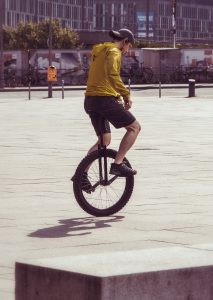
However, many aspiring unicyclists struggle with getting started and progressing due to a lack of guidance and understanding of the fundamental techniques.
The secret to riding a unicycle lies in mastering a few key skills and adopting a dedicated practice routine.
In this article, we’ll reveal the top 10 secrets to riding a unicycle, ensuring you have the insights needed to succeed. Each secret is crucial in its own right, contributing to your overall unicycling prowess.
What’s The Secret To Riding A Unicycle? Find 10 Best Secrets
1. Finding the Right Unicycle
The secret to riding a unicycle begins with finding the right unicycle for your needs. Choosing the appropriate size and type of unicycle can make a significant difference in your learning process and overall comfort. Beginners should start with a 20-inch unicycle, which provides a good balance between maneuverability and stability. More experienced riders might opt for larger or more specialized unicycles, such as those designed for mountain unicycling or long-distance riding.
Selecting the right unicycle involves considering factors like wheel size, saddle comfort, and build quality. Ensure that the unicycle is well-constructed and suitable for your intended use. Test different models if possible to find one that feels comfortable and manageable. Remember, the secret to riding a unicycle effectively starts with having the right equipment.
Pros:
- Enhanced comfort
- Better control
- Improved learning experience
- Suitable for skill level
- Increased stability
- Better maneuverability
- Long-term durability
Cons:
- Initial investment
- Requires research
- May need upgrades
2. Mastering Balance
The secret to riding a unicycle effectively is mastering balance, which is the foundation of all unicycling skills. Balancing on a unicycle involves maintaining your center of gravity over the wheel while using your arms for stabilization. Beginners should practice balancing by holding onto a wall or railing while getting accustomed to the feel of the unicycle.
Start by sitting on the unicycle and placing your feet on the pedals in a balanced position. Gradually shift your weight and try to maintain an upright posture. As you become more comfortable, practice balancing without support, focusing on keeping your movements smooth and controlled. The secret to riding a unicycle with confidence lies in consistent practice and patience in mastering balance.
Pros:
- Fundamental skill
- Improved stability
- Enhanced control
- Confidence building
- Key to progress
- Essential for tricks
- Reduces falls
Cons:
- Time-consuming
- Initial difficulty
- Requires patience
3. Developing Core Strength
Developing core strength is another crucial secret to riding a unicycle. A strong core provides the stability needed to maintain balance and control while riding. Core exercises such as planks, sit-ups, and leg raises can significantly enhance your unicycling performance by strengthening the muscles used to keep you upright.
Incorporate core-strengthening exercises into your regular fitness routine to build the necessary strength for unicycling. A strong core not only aids in balance but also reduces fatigue, allowing you to ride for longer periods. Remember, the secret to riding a unicycle with ease and endurance is a strong core.
Pros:
- Enhanced stability
- Better balance
- Reduced fatigue
- Longer rides
- Improved endurance
- Overall fitness boost
- Injury prevention
Cons:
- Requires additional exercise
- Time commitment
- Initial soreness
4. Practicing Pedal Control
Pedal control is essential for smooth and efficient unicycling. The secret to riding a unicycle with precision lies in mastering pedal control, which involves coordinating your pedaling speed and force. Beginners often struggle with jerky or uneven pedaling, leading to loss of balance and falls.
To practice pedal control, start by riding slowly and focusing on making smooth, consistent pedal strokes. Gradually increase your speed while maintaining control. Practice stopping and starting, as well as making turns, to develop a full range of pedal control. The secret to riding a unicycle smoothly and confidently is mastering your pedaling technique.
Pros:
- Smoother ride
- Better control
- Increased confidence
- Improved maneuverability
- Essential for tricks
- Reduces falls
- Efficient energy use
Cons:
- Takes time
- Requires practice
- Initial frustration
5. Using Your Arms for Balance
Using your arms effectively is another secret to riding a unicycle. Your arms play a crucial role in maintaining balance and stability while riding. Beginners often forget to use their arms, leading to a higher risk of falling and difficulty in maintaining balance.
Extend your arms to the sides and use them to make subtle adjustments to your balance. Your arms act as counterweights, helping you stay upright. Practice riding with your arms extended and experiment with different arm positions to find what works best for you. The secret to riding a unicycle with better balance is effectively using your arms.
Pros:
- Improved balance
- Better stability
- Reduced falls
- Increased control
- Easier turning
- Enhanced confidence
- Essential for tricks
Cons:
- Initial awkwardness
- Requires practice
- May tire arms
6. Keeping Your Eyes Forward
One of the simplest yet most effective secrets to riding a unicycle is keeping your eyes forward. Many beginners make the mistake of looking down at the pedals or the ground, which can disrupt their balance and coordination. Keeping your eyes forward helps you maintain better posture and balance.
Focus on a point in the distance rather than staring at the ground. This helps your body maintain a natural, upright position and improves your overall stability. The secret to riding a unicycle with confidence and control is keeping your gaze forward.
Pros:
- Improved posture
- Better balance
- Enhanced coordination
- Increased stability
- Reduced falls
- Easier navigation
- Boosted confidence
Cons:
- Hard to remember
- Initial difficulty
- Requires practice
7. Practicing on Different Terrains
Practicing on different terrains is a key secret to riding a unicycle with versatility and adaptability. While starting on a flat, smooth surface is ideal for beginners, progressing to varied terrains such as grass, gravel, and inclines can enhance your skills and confidence.
Begin by mastering flat surfaces, then gradually introduce new terrains to challenge your balance and control. Riding on different surfaces helps you adapt to various conditions and improves your overall unicycling ability. The secret to riding a unicycle proficiently in any environment is practicing on diverse terrains.
Pros:
- Versatile skills
- Enhanced adaptability
- Increased confidence
- Better control
- Improved balance
- Prepared for obstacles
- Fun and challenging
Cons:
- Increased falls
- Higher difficulty
- Requires persistence
8. Joining a Unicycling Community
Joining a unicycling community is an invaluable secret to riding a unicycle. Being part of a group provides support, motivation, and opportunities to learn from more experienced riders. Unicycling communities often organize practice sessions, events, and workshops, which can accelerate your learning process.
Seek out local unicycling clubs or online groups where you can connect with fellow enthusiasts. Sharing tips, participating in group rides, and receiving feedback can significantly improve your skills. The secret to riding a unicycle successfully is often found in the camaraderie and knowledge shared within a community.
Pros:
- Support network
- Shared tips
- Increased motivation
- Faster learning
- Organized events
- Access to expertise
- Social interaction
Cons:
- Finding a group
- Time commitment
- Potential membership fees
9. Setting Realistic Goals
Setting realistic goals is a crucial secret to riding a unicycle and maintaining progress. Unicycling can be challenging, and it’s essential to set achievable milestones to stay motivated and track your improvement. Start with small, manageable goals, such as riding a certain distance or mastering a specific skill.
Gradually increase the difficulty of your goals as you become more proficient. Celebrate your achievements, no matter how small, to stay motivated. The secret to riding a unicycle and continuously improving lies in setting and achieving realistic goals.
Pros:
- Structured progress
- Increased motivation
- Clear milestones
- Trackable improvement
- Boosted confidence
- Focused practice
- Encourages perseverance
Cons:
- Potential frustration
- Requires planning
- Needs discipline
10. Maintaining a Positive Attitude
Maintaining a positive attitude is perhaps the most important secret to riding a unicycle. Unicycling can be frustrating, especially in the beginning stages. It’s crucial to stay positive, patient, and persistent. Remember that everyone progresses at their own pace, and setbacks are a natural part of the learning process.
Embrace challenges as opportunities to learn and improve. Celebrate your successes and don’t be discouraged by failures. The secret to riding a unicycle with enjoyment and success is a positive and determined mindset.
Pros:
- Increased perseverance
- Enjoyable practice
- Better learning experience
- Reduced frustration
- Boosted confidence
- Long-term success
- Encourages resilience
Cons:
- Requires effort
- Initial difficulty
- Needs self-motivation
Frequently Asked Questions (FAQs)
1. What is the best unicycle for beginners?
For beginners, a 20-inch unicycle is generally recommended due to its balance between stability and maneuverability. Look for a unicycle with a comfortable saddle and durable construction.
2. How long does it take to learn to ride a unicycle?
Learning to ride a unicycle can take anywhere from a few days to several weeks, depending on the individual. Consistent practice and patience are key to mastering the skill.
3. Can unicycling improve my balance?
Yes, unicycling is an excellent way to improve your balance and coordination. The constant adjustments required to stay upright help strengthen your core and enhance your overall stability.
4. Is unicycling a good workout?
Unicycling provides a full-body workout, engaging your core, legs, and arms. It improves cardiovascular fitness, muscle strength, and flexibility.
5. What safety gear should I use when unicycling?
Wearing a helmet, knee pads, elbow pads, and wrist guards is recommended to protect yourself from falls and injuries while learning to unicycle.
6. Can I ride a unicycle on rough terrain?
Yes, with practice, you can ride a unicycle on various terrains, including grass, gravel, and inclines. Start on flat surfaces and gradually progress to more challenging terrains.
7. How can I improve my unicycling skills faster?
Joining a unicycling community, setting realistic goals, and practicing regularly are effective ways to improve your unicycling skills faster.
8. What are the common mistakes beginners make when learning to unicycle?
Common mistakes include looking down at the pedals, neglecting to use arms for balance, and trying to pedal too fast. Focus on maintaining an upright posture and making smooth, controlled movements.
9. How do I stop falling off my unicycle?
Improving your balance, practicing pedal control, and using your arms for stability can help reduce falls. Start with short practice sessions and gradually increase the duration as you gain confidence.
10. What are the benefits of unicycling?
Unicycling offers numerous benefits, including improved balance, coordination, cardiovascular fitness, muscle strength, and mental focus. It’s also a fun and unique way to stay active.
Conclusion
Unicycling is a rewarding and enjoyable skill that offers numerous physical and mental benefits. The secret to riding a unicycle lies in mastering a few key techniques, maintaining a positive attitude, and practicing consistently.
By finding the right unicycle, mastering balance, developing core strength, and joining a unicycling community, you’ll be well on your way to becoming a proficient unicyclist.
Remember to set realistic goals, practice on different terrains, and always keep your eyes forward. Embrace the challenges, celebrate your successes, and enjoy the journey of unicycling.
If you’re ready to embark on your unicycling adventure, start by applying these secrets to your practice routine. With dedication and perseverance, you’ll soon discover the joy and satisfaction of riding a unicycle. Happy unicycling
What Is The Best Wheel Size For A Unicycle? Find Top 6
Inquisitive about what is the best wheel size for a unicycle? Primarily ,the best wheel size for a unicycle varies: 20-inch wheels offer excellent control for tricks, 24-inch wheels balance speed and maneuverability for general riding, 26-inch wheels excel in off-road terrain, 29-inch wheels provide speed for commuting, and 36-inch wheels are ideal for long-distance touring due to their efficiency.
When it comes to unicycling, the wheel size is more than just a number. It plays a crucial role in determining the type of unicycling you can perform, your comfort level, and your overall riding experience.
Unicycles come in a variety of wheel sizes, each suited to different styles of riding and skill levels.
From small wheels that offer control and precision for beginners and trick riders to large wheels designed for speed and long-distance travel, the right wheel size can make all the difference.
In this article, we will delve into the specifics of different unicycle wheel sizes, discuss their advantages and disadvantages, and provide insights to help you make an informed decision.
What Is The Best Wheel Size For A Unicycle? Find Top 6
1. 16-Inch Wheels: Perfect for Young Riders and Beginners
Description and Uses
The 16-inch wheel is the smallest commonly available unicycle wheel size, making it an excellent choice for young children and very small riders. This size is particularly beneficial for beginners who are just starting to learn the basics of unicycling. The smaller wheel size provides better control and stability at lower speeds, which is crucial for those still mastering balance and coordination.
Pros
- Ideal for young children and very small riders
- Provides excellent control and stability at low speeds
- Lightweight and easy to maneuver
- Great for learning the basics of unicycling
Cons
- Limited speed and range
- Not suitable for older children, teenagers, or adults
- Limited versatility in riding styles
2. 20-Inch Wheels: Versatility for Beginners and Freestyle Riders
Description and Uses
The 20-inch wheel is one of the most popular and versatile unicycle sizes. It strikes a perfect balance between control and maneuverability, making it ideal for beginners and freestyle riders. This size is suitable for performing tricks, riding indoors, and navigating small spaces. The 20-inch wheel provides a stable platform for learning new skills while being agile enough for advanced tricks.
Pros
- Versatile and suitable for various riding styles
- Good balance between control and maneuverability
- Ideal for performing tricks and freestyle riding
- Suitable for both beginners and intermediate riders
Cons
- Limited speed and distance capabilities
- Not ideal for long-distance commuting or off-road riding
3. 24-Inch Wheels: The All-Rounder for Distance and Off-Road Riding
Description and Uses
The 24-inch wheel is considered the all-rounder of unicycle sizes. It offers a good balance between speed and control, making it suitable for a variety of riding styles, including commuting, light off-road riding, and casual riding. This size is ideal for beginners who want to travel longer distances and for those interested in exploring off-road trails.
Pros
- Balanced combination of speed and control
- Suitable for commuting and light off-road riding
- Good for longer distances than smaller wheels
- Versatile for various riding styles
Cons
- May not be as agile as smaller wheels for tricks
- Not as fast or efficient as larger wheels for long-distance riding
4. 26-Inch Wheels: Ideal for Off-Road and Mountain Unicycling
Description and Uses
The 26-inch wheel is designed for off-road and mountain unicycling. It provides better performance on rough terrain and allows for greater speed and stability on trails. This size is favored by riders who enjoy exploring nature and tackling challenging trails. The 26-inch wheel can handle obstacles and uneven surfaces more effectively than smaller wheels.
Pros
- Excellent performance on rough terrain
- Greater speed and stability on trails
- Suitable for off-road and mountain unicycling
- Handles obstacles and uneven surfaces well
Cons
- Less maneuverable than smaller wheels for tricks
- Can be more challenging for beginners to control
5. 29-Inch Wheels: Speed and Efficiency for Long-Distance Commuting
Description and Uses
The 29-inch wheel is perfect for long-distance commuting and road riding. It offers increased speed and a smoother ride over long distances, making it ideal for experienced riders who need to cover more ground. This size is also suitable for light off-road riding, providing a balance between speed and versatility.
Pros
- Increased speed and efficiency for long-distance riding
- Smooth ride over various terrains
- Suitable for commuting and light off-road riding
- Balances speed and versatility
Cons
- Requires more skill to control
- Less suitable for performing tricks
6. 36-Inch Wheels: The Ultimate for Long-Distance Touring
Description and Uses
The 36-inch wheel is the largest commonly available unicycle wheel size. It is designed for experienced riders focused on long-distance touring and high-speed road riding. This size provides maximum speed and efficiency over long distances, but it requires advanced skill to control. The 36-inch wheel is less maneuverable, making it challenging for tricks and tight turns.
Pros
- Maximum speed and efficiency for long-distance touring
- Smooth and stable ride over long distances
- Ideal for experienced riders
- Excellent for high-speed road riding
Cons
- Requires advanced skill to control
- Less maneuverable and not suitable for tricks
- Can be challenging for beginners
Factors to Consider When Choosing a Wheel Size
Whether you’re new to unicycling or looking to upgrade your current unicycle, understanding the impact of wheel size will help you choose the perfect unicycle for your needs.
Unicycling is a unique and rewarding activity that challenges your balance, coordination, and endurance. One of the most critical decisions for any unicyclist, whether a beginner or an expert, is choosing the right wheel size.
The wheel size of your unicycle significantly impacts your riding experience, affecting stability, speed, and maneuverability.
When selecting the best wheel size for your unicycle, consider the following factors:
Skill Level
- Beginners should start with smaller wheels (16-inch or 20-inch) for better control and stability.
- Intermediate and advanced riders can opt for larger wheels (24-inch, 26-inch, 29-inch, or 36-inch) based on their riding goals.
Intended Use
- For tricks and freestyle riding, a 20-inch wheel is ideal.
- For commuting and general riding, a 24-inch or 26-inch wheel offers a good balance.
- For long-distance and road riding, a 29-inch or 36-inch wheel is best.
Terrain
- Smaller wheels are suitable for flat and smooth surfaces.
- Larger wheels handle rough terrain and obstacles better, making them suitable for off-road and mountain unicycling.
Rider Height and Size
- Ensure the unicycle fits your height and size for comfort and control.
- Larger wheels may be more challenging for shorter riders to handle.
Best Wheel Size For A Unicycle FAQs
1. What wheel size is best for beginners?
For beginners, a 20-inch wheel is generally the best choice. It offers a good balance between control and maneuverability, making it easier to learn the basics of unicycling.
2. Can I use a 29-inch wheel for off-road riding?
Yes, a 29-inch wheel can be used for light off-road riding. It provides a balance between speed and versatility, making it suitable for various terrains.
3. What is the fastest unicycle wheel size?
The 36-inch wheel is the fastest unicycle wheel size. It offers maximum speed and efficiency, ideal for long-distance touring and high-speed road riding.
4. Is a 24-inch wheel good for commuting?
Yes, a 24-inch wheel is good for commuting. It offers a good balance between speed and control, making it suitable for covering longer distances.
5. What wheel size is best for performing tricks?
A 20-inch wheel is best for performing tricks and freestyle riding. It provides excellent control and maneuverability, making it easier to execute tricks.
6. Can children use a 16-inch wheel?
Yes, a 16-inch wheel is ideal for young children and very small riders. It provides better control and stability at lower speeds, making it suitable for learning the basics.
7. What wheel size is best for mountain unicycling?
A 26-inch wheel is best for mountain unicycling. It offers better performance on rough terrain and provides greater speed and stability on trails.
8. How do I choose the right unicycle wheel size?
Consider your skill level, intended use, terrain, and rider height when choosing the right unicycle wheel size. Beginners should start with smaller wheels, while experienced riders can opt for larger wheels based on their riding goals.
9. Are larger wheels harder to control?
Yes, larger wheels can be harder to control, especially for beginners. They require more skill and practice to handle effectively, but they offer increased speed and efficiency.
10. What is the most versatile unicycle wheel size?
The 24-inch wheel is the most versatile unicycle wheel size. It provides a good balance between speed and control, making it suitable for various riding styles, including commuting and light off-road riding.
Conclusion
Choosing the best wheel size for a unicycle is a crucial decision that affects your riding experience. From the stability and control of smaller wheels to the speed and efficiency of larger wheels, each size offers unique advantages and challenges.
By considering your skill level, intended use, terrain, and personal preferences, you can select the perfect wheel size to enhance your unicycling journey.
Unicycling is a rewarding activity that combines physical fitness with mental discipline.
Whether you’re a beginner just starting or an experienced rider looking to upgrade, the right wheel size can make all the difference. Take the time to evaluate your needs and try different sizes if possible to find the unicycle that best suits your riding style
How Many People Know How Do You Ride A Unicycle?
Riding a unicycle is a unique and challenging skill that requires balance, coordination, and practice.Unlike bicycles, unicycles have only one wheel, which adds an extra layer of difficulty to the riding experience.
Despite these challenges, unicycling has gained popularity around the world. In the United States alone, it’s estimated that about a million people know how to ride a unicycle.
This article delves into the world of unicycling, exploring its popularity, the skills required, records set, and much more. By understanding these aspects, you’ll gain a comprehensive view of how many people know how to ride a unicycle and the fascinating culture surrounding it.
Reviews : 10 Best Unicycle For Beginners
How Many People Know How to Ride a Unicycle?
The Popularity of Unicycling
Unicycling is not just a niche hobby; it’s a growing trend with a dedicated community of enthusiasts. In the United States, around a million people have mastered the art of riding a unicycle. This number might seem surprising, but it reflects the increasing interest in unique and physically engaging activities. Unicycling clubs, competitions, and events are becoming more common, providing platforms for riders to showcase their skills and connect with like-minded individuals.
Regular Use of Unicycles
Among those who know how to ride a unicycle, approximately 400,000 people in the U.S. use their unicycles regularly. This regular use highlights the practicality and enjoyment that unicycling brings to people’s lives. Whether for commuting, exercise, or entertainment, unicycles offer a distinctive way to get around and stay active.
The Appeal of Unicycling
Several factors contribute to the appeal of unicycling:
- Fitness and Balance: Riding a unicycle is an excellent workout that strengthens core muscles and improves balance.
- Environmental Benefits: As a mode of transportation, unicycles are eco-friendly and reduce carbon footprints.
- Community and Competitions: Unicycling fosters a sense of community, with numerous clubs and competitions worldwide.
- Personal Challenge: Mastering unicycling is a rewarding personal challenge that offers a sense of accomplishment.
Unicycle Records and Achievements
Unicycling has a rich history of records and remarkable achievements. These feats demonstrate the incredible skill and dedication of unicyclists around the world.
Tallest Unicycle
The tallest unicycle ever built stands at an astonishing 144.9 feet. This towering unicycle was ridden by Sem Abrahams, who managed to stay balanced and ride it for 28 feet. This achievement showcases the extreme capabilities of unicyclists and the innovative designs within the sport.
Unicycle Sprint Record
Speed is another exciting aspect of unicycling. The record for the 328-foot unicycle sprint is held by Peter Rosendahl. His achievement highlights the athleticism and precision required to excel in unicycle racing.
Case Studies: Unicycling in Action
To understand the impact of unicycling, let’s look at a few case studies that illustrate how this activity influences individuals and communities.
Case Study 1: Unicycling as Therapy
In recent years, unicycling has been incorporated into therapy programs for individuals with physical and mental health challenges. For instance, a rehabilitation center in California introduced unicycling as part of their physical therapy regimen. Patients reported significant improvements in their balance, coordination, and overall confidence. The therapeutic benefits of unicycling are being recognized more widely, leading to its adoption in various health programs.
Case Study 2: Unicycling in Schools
Several schools across the U.S. have included unicycling in their physical education curriculum. A middle school in Oregon started a unicycle club that quickly gained popularity among students. The club not only teaches students how to ride but also emphasizes teamwork, perseverance, and goal-setting. As a result, students have shown increased physical fitness and a greater sense of community within the school.
Case Study 3: Unicycling for Environmental Awareness
A group of environmental activists in New York City uses unicycles to promote eco-friendly transportation. They organize unicycle parades and events to raise awareness about sustainable living. Their unique approach has garnered media attention and inspired others to consider unicycling as a viable and environmentally friendly mode of transportation.
How Many People Know How Do You Ride A Unicycle FAQs
1. How many people know how to ride unicycles?
In the United States, approximately one million people have learned how to ride a unicycle.
2. What are the benefits of unicycling?
Unicycling offers numerous benefits, including improved balance, core strength, cardiovascular fitness, and mental focus. It also provides a unique and enjoyable form of exercise.
3. Can unicycling be dangerous?
Like any physical activity, unicycling carries some risk of injury, particularly from falls. However, with proper safety gear (helmet, knee pads, elbow pads) and cautious practice, the risk can be minimized.
4. Are there different types of unicycles?
Yes, there are various types of unicycles designed for different purposes, including freestyle, trials, mountain, and commuting unicycles. Each type has specific features tailored to its intended use.
5. How expensive are unicycles?
The cost of a unicycle can vary widely, ranging from $50 for a basic model to several hundred dollars for specialized or high-end unicycles. Beginners can start with an affordable model and upgrade as they progress.
6. Where can I learn to ride a unicycle?
Many communities have unicycling clubs or classes where beginners can learn the basics. Online tutorials and videos are also valuable resources for self-learners.
7. Is unicycling a good workout?
Yes, unicycling provides an excellent workout that engages the core, legs, and arms. It also enhances balance and coordination, making it a comprehensive form of exercise.
8. Can unicycles be used for commuting?
While not as common as bicycles, unicycles can be used for commuting, especially in urban areas with smooth terrain. Some people find unicycling to be a fun and efficient way to travel short distances.
9. Are there unicycling competitions?
Yes, unicycling competitions are held worldwide, including events like races, freestyle routines, trials, and mountain unicycling. These competitions provide a platform for unicyclists to showcase their skills and compete against others.
10. What is the history of unicycling?
Unicycling dates back to the late 19th century, evolving from the penny-farthing bicycle. It gained popularity in circuses and has since expanded into various recreational and competitive forms.
11. How difficult is it to learn to ride a unicycle?
Learning to ride a unicycle can be challenging, but with practice and persistence, most people can master it. It typically takes a few weeks to a few months to become proficient, depending on the individual’s balance and coordination.
Conclusion
Unicycling is a unique and rewarding activity that combines physical fitness, skill, and community. With around a million people in the United States knowing how to ride a unicycle and 400,000 using their unicycles regularly, it’s clear that this pastime has a dedicated following.
Unicycling offers numerous benefits, from improved balance and strength to environmental sustainability and mental focus.
The achievements and records set by unicyclists worldwide highlight the incredible potential of this sport.
Whether you’re interested in learning to ride a unicycle, joining a unicycling community, or simply appreciating the skill involved, unicycling has something to offer.
If you’re inspired to take up unicycling, there are plenty of resources and communities ready to help you get started. Embrace the challenge, enjoy the ride, and become part of the growing unicycling community.
10 Best Electric Unicycle For Beginners
Curious about what best electric unicycle for beginners are ? Well, the best electric unicycle for beginners includes the Inmotion V8F, King Song 14D, Gotway MTen3, Segway Ninebot One S2, and Inmotion V10F because they offer a perfect blend of performance, safety features, ease of use, and affordability.
- Electric unicycle for beginners have surged in popularity as a fun, efficient, and eco-friendly mode of transportation.
- These personal electric vehicles are ideal for commuting, exploring, or simply enjoying a new hobby.
- If you’re a beginner or new to this exciting world of unicycles, finding the right unicycle can be challenging.
To help you make an informed decision, we’ve compiled a list of the 10 best electric unicycles for beginners. Each of these models offers unique features that cater to novice riders, ensuring a smooth and enjoyable learning experience.
Reviews:10 Best Electric Unicycles for Beginners
1. Inmotion V8F – Best electric unicycle for beginners 2024
The Inmotion V8F is considered the best electric unicycle for beginners in 2024. It offers a perfect blend of performance, safety, and ease of use. With a top speed of 21.7 mph and a range of up to 34 miles on a single charge, it provides ample power for new riders.
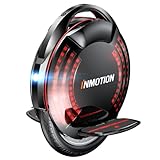
The V8F features a slim design, making it easy to handle and maneuver, even for beginners.
Electric unicycle beginners will appreciate the responsive and intuitive controls, which make learning to ride a breeze. The built-in handle and lightweight design ensure that carrying the unicycle is hassle-free. Additionally, the V8F includes a bright headlight and customizable side lights for enhanced visibility and safety during night rides.
Pros:
- Slim design
- Lightweight
- Good range
- Intuitive controls
- Built-in handle
- Bright headlight
- Customizable lights
Cons:
- Moderate speed
- Limited off-road capability
- Small foot pedals
2. King Song 14D – Best budget electric unicycle for beginners
For those looking for the best budget electric unicycle for beginners, the King Song 14D is an excellent choice. It combines affordability with high performance, making it ideal for new riders. The 14D has a top speed of 18.6 mph and a range of up to 30 miles, providing a solid balance of speed and endurance.
This electric unicycle for beginners comes with a robust build and excellent safety features, including a headlight, taillight, and side LED lights. The 14D also features a comfortable and ergonomic design, ensuring a smooth and enjoyable ride. Its compact size and lightweight build make it easy to carry and store.
Pros:
- Affordable
- Good performance
- Robust build
- Safety features
- Comfortable design
- Compact size
- Lightweight
Cons:
- Moderate speed
- Smaller range
- Basic features
3. Gotway MTen3 – Best electric unicycle for beginner riders
The Gotway MTen3 is the best electric unicycle for beginner riders due to its compact size and lightweight design. Weighing only 22 lbs, the MTen3 is easy to carry and store, making it perfect for urban commuters. Despite its small size, it boasts a top speed of 23 mph and a range of up to 25 miles.
This electric unicycle for beginners is equipped with a powerful motor and a durable build, ensuring a smooth and stable ride. The MTen3’s responsive controls and excellent maneuverability make it easy for new riders to learn and navigate through city streets.
Pros:
- Compact size
- Lightweight
- Powerful motor
- Durable build
- Smooth ride
- Responsive controls
- Easy maneuverability
Cons:
- Limited range
- Smaller wheel
- No built-in handle
4. Segway Ninebot One S2 – Best electric unicycle with beginner-friendly features
The Segway Ninebot One S2 is the best electric unicycle with beginner-friendly features, designed to make learning to ride as easy as possible. It offers a top speed of 14 mph and a range of up to 15 miles, making it a great choice for short commutes and recreational rides.

This electric unicycle for beginners features a sleek and modern design, with customizable LED lights for added visibility and style. The One S2 is equipped with advanced safety features, including a dual battery system and a durable shell to protect against impacts. Its compact size and lightweight build make it easy to carry and store.
Pros:
- Beginner-friendly features
- Modern design
- Customizable lights
- Safety features
- Compact size
- Lightweight
- Easy to carry
Cons:
- Limited range
- Moderate speed
- Smaller wheel
5. Inmotion V10F – Best electric unicycle for new riders
The Inmotion V10F is the best electric unicycle for new riders, offering a perfect balance of power, performance, and safety. With a top speed of 25 mph and a range of up to 62 miles, it provides ample power for extended rides. The V10F features a robust build and advanced safety features, making it ideal for beginners.
This electric unicycle for beginners is equipped with a powerful motor and large wheel, ensuring a smooth and stable ride on various terrains. The V10F also includes a bright headlight and customizable side lights for enhanced visibility and safety during night rides. Its ergonomic design ensures a comfortable and enjoyable riding experience.
Pros:
- Powerful motor
- Long range
- Robust build
- Advanced safety features
- Large wheel
- Bright headlight
- Customizable lights
Cons:
- Expensive
- Heavy
- Larger size
6. King Song 16S – Best electric unicycle for beginner commuting
The King Song 16S is the best electric unicycle for beginner commuting, offering a perfect combination of performance, comfort, and portability. With a top speed of 22 mph and a range of up to 40 miles, it is ideal for daily commutes and recreational rides.
This electric unicycle for beginners features a comfortable and ergonomic design, with large foot pedals and a built-in handle for easy carrying. The 16S is equipped with advanced safety features, including a bright headlight, taillight, and side LED lights. Its compact size and lightweight build make it easy to carry and store.
Pros:
- Comfortable design
- Good performance
- Advanced safety features
- Large foot pedals
- Built-in handle
- Bright headlight
- Compact size
Cons:
- Moderate speed
- Limited off-road capability
- Basic features
7. Gotway Tesla V2 – Best lightweight electric unicycle for beginners
The Gotway Tesla V2 is the best lightweight electric unicycle for beginners, offering an impressive combination of power, performance, and portability. With a top speed of 30 mph and a range of up to 50 miles, it provides ample power for extended rides. The Tesla V2 features a robust build and advanced safety features, making it ideal for new riders.
This electric unicycle for beginners is equipped with a powerful motor and large wheel, ensuring a smooth and stable ride on various terrains. The Tesla V2 also includes a bright headlight and customizable side lights for enhanced visibility and safety during night rides. Its lightweight build ensures easy carrying and storage.
Pros:
- Powerful motor
- Long range
- Robust build
- Advanced safety features
- Large wheel
- Bright headlight
- Lightweight build
Cons:
- Expensive
- Heavy
- Larger size
8. Inmotion V5F – Best stable electric unicycle for beginners
The Inmotion V5F is the best stable electric unicycle for beginners, offering a perfect combination of stability, performance, and comfort. With a top speed of 15.6 mph and a range of up to 21.8 miles, it is ideal for short commutes and recreational rides.
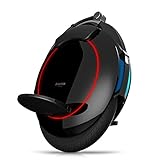
This electric unicycle for beginners features a comfortable and ergonomic design, with large foot pedals and a built-in handle for easy carrying. The V5F is equipped with advanced safety features, including a bright headlight, taillight, and side LED lights. Its compact size and lightweight build make it easy to carry and store.
Pros:
- Stable ride
- Comfortable design
- Advanced safety features
- Large foot pedals
- Built-in handle
- Bright headlight
- Compact size
Cons:
- Limited range
- Moderate speed
- Basic features
9. King Song 18XL – Best easy-to-learn electric unicycle for beginners
The King Song 18XL is the best easy-to-learn electric unicycle for beginners, offering a perfect combination of power, performance, and comfort. With a top speed of 31 mph and a range of up to 70 miles, it provides ample power for extended rides. The 18XL features a robust build and advanced safety features, making it ideal for new riders.
This electric unicycle for beginners is equipped with a powerful motor and large wheel, ensuring a smooth and stable ride on various terrains. The 18XL also includes a bright headlight and customizable side lights for enhanced visibility and safety during night rides. Its ergonomic design ensures a comfortable and enjoyable riding experience.
Pros:
- Powerful motor
- Long range
- Robust build
- Advanced safety features
- Large wheel
- Bright headlight
- Comfortable design
Cons:
- Expensive
- Heavy
- Larger size
10. Veteran Sherman – Best beginner electric unicycle with safety features
The Veteran Sherman is the best beginner electric unicycle with safety features, offering a perfect combination of power, performance, and comfort. With a top speed of 45 mph and a range of up to 128 miles, it provides ample power for extended rides.

The Sherman features a robust build and advanced safety features, making it ideal for new riders.
This electric unicycle for beginners is equipped with a powerful motor and large wheel, ensuring a smooth and stable ride on various terrains. The Sherman also includes a bright headlight and customizable side lights for enhanced visibility and safety during night rides. Its ergonomic design ensures a comfortable and enjoyable riding experience.
Pros:
- Powerful motor
- Long range
- Robust build
- Advanced safety features
- Large wheel
- Bright headlight
- Comfortable design
Cons:
- Very expensive
- Heavy
- Larger size
Best Electric Unicycle For Beginners FAQs
1. What is the best electric unicycle for beginners in 2024?
The Inmotion V8F is considered the best electric unicycle for beginners in 2024 due to its perfect blend of performance, safety, and ease of use.
2. What makes an electric unicycle beginner-friendly?
A beginner-friendly electric unicycle typically has features like responsive controls, safety lights, a comfortable design, and moderate speed and range.
3. Are electric unicycles safe for beginners?
Yes, many electric unicycles are designed with safety features like headlights, taillights, durable shells, and stable riding dynamics to ensure a safe experience for beginners.
4. How long does it take to learn to ride an electric unicycle?
The time it takes to learn to ride an electric unicycle varies from person to person, but most beginners can get the hang of it within a few hours to a few days of practice.
5. What is the average range of a beginner electric unicycle?
The average range of a beginner electric unicycle is typically between 20 to 40 miles on a single charge, depending on the model.
6. Can electric unicycles be used for commuting?
Yes, many electric unicycles are designed for commuting, offering sufficient speed and range for daily travel, along with portability features like built-in handles.
7. What should I look for when buying an electric unicycle for beginners?
When buying an electric unicycle for beginners, consider factors like speed, range, weight, safety features, ease of use, and price.
8. Are there affordable options for beginner electric unicycles?
Yes, there are affordable options like the King Song 14D that offer a good balance of performance and cost, making them suitable for beginners.
9. Can beginners use high-speed electric unicycles?
While high-speed electric unicycles can be tempting, beginners are generally advised to start with models that offer moderate speeds to ensure safety while learning.
10. What is the most important feature in a beginner electric unicycle?
The most important feature in a beginner electric unicycle is stability, as it helps new riders maintain balance and control while learning to ride.
Conclusion
Choosing the best electric unicycle for beginners is crucial to ensure a smooth and enjoyable riding experience. Models like the Inmotion V8F, King Song 14D, and Gotway MTen3 offer a perfect blend of performance, safety, and ease of use, making them ideal for new riders.
When selecting an electric unicycle, consider factors like speed, range, weight, and safety features to find the model that best suits your needs.
With the right electric unicycle, beginners can enjoy the thrill of riding while staying safe and confident. Start your journey with one of these top 10 electric unicycles for beginners and experience the freedom and excitement of personal electric transportation. Happy riding